AI Ticket Triage System
Automated support ticket classification and routing using LLM-powered triage — reducing manual decision time from 5–10 minutes to under 2 seconds.
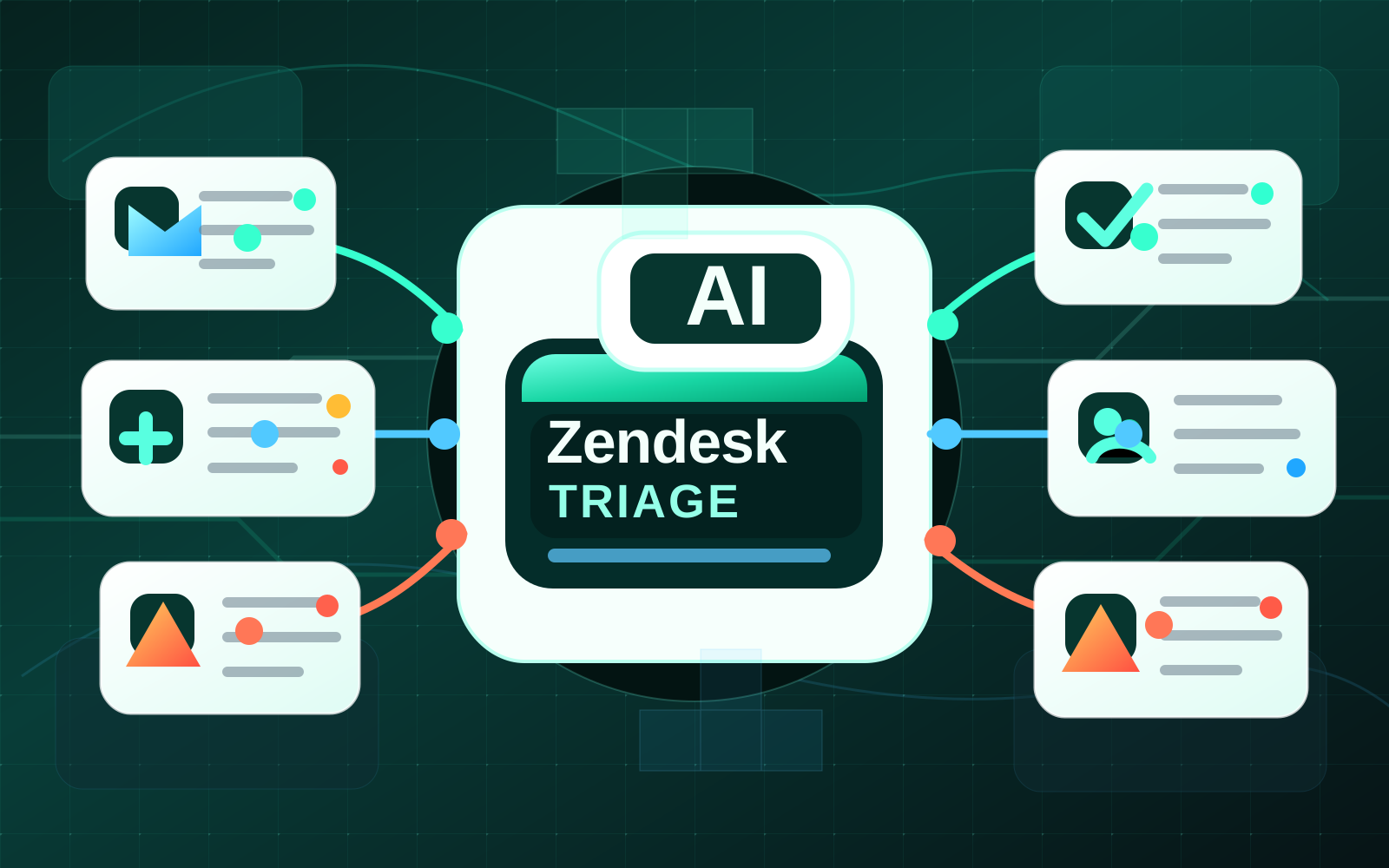
An LLM-powered triage system that classifies, scores, and routes incoming Zendesk tickets in under 2 seconds — replacing 5–10 minutes of manual decision-making with a 3-tier confidence-based router and an auto-drafted response for the agent to review.
How it works
Sequence detail
The Problem
Manual ticket triage is a bottleneck in customer support. Every inbound ticket requires a human agent to read, categorize, and route to the right team—averaging 5–10 minutes per ticket. With 9 products across 6 verticals, routing complexity compounds, and misrouted tickets take 2x longer to resolve.
What I Built
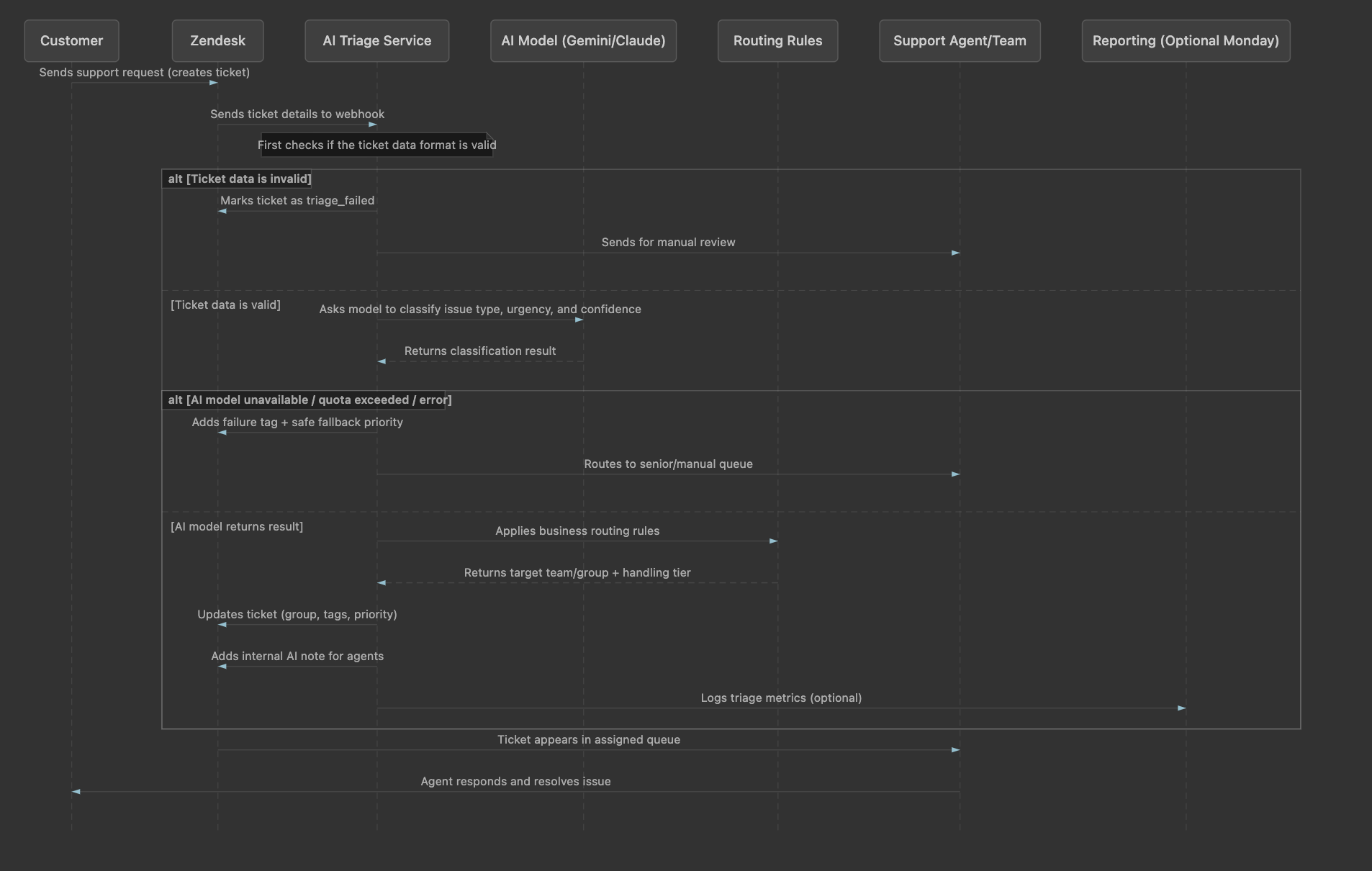
Created an AI triage system that reads every incoming Zendesk ticket, classifies it across 9 issue categories, scores urgency with confidence tiers, and automatically routes to the right team in under 2 seconds. The architecture combines a Zendesk webhook (HTTP POST intake) → Express.js backend → Claude Sonnet LLM classifier → confidence-based routing engine → Zendesk writeback. Each ticket receives a private internal note with category, product, priority, sentiment, confidence label, reasoning, and optional draft response for agent review.
Routing & Escalation Logic
The system implements a 3-tier confidence-based routing engine: High confidence (>0.80) auto-routes with draft response, Medium (0.50–0.80) routes with context note for agent review, and Low (<0.50) escalates to senior team for manual assessment. Escalation overrides ensure P1 priority, data loss, security, or legal-tagged tickets always route to senior team regardless of confidence score.
How It Works
The system follows a 4-step processing pipeline: (1) Zendesk Webhook—incoming tickets arrive via HTTP POST; (2) LLM AI Classifier—the system classifies the ticket, scores confidence, and flags escalation risks; (3) Routing Engine—assigns severity tier and target team based on confidence thresholds; (4) Zendesk Writeback—updates the ticket metadata and appends a private internal note with reasoning and optional draft response.
Business Impact
Reduced classification time from 5–10 minutes to under 2 seconds per ticket (240x faster). Eliminated human routing error through deterministic confidence-based logic. Improved agent efficiency by pre-drafting responses on high-confidence tickets. Built in feedback loops and accuracy tracking from day one—the system learns from agent overrides over time.